Mining Cable5 Min Read Electrical Systems Departmenton2026-01-22 Type 455 Cables (3.3kV – 33kV): Technical Advantages of Interstitial Earth Conductor Design In medium and high-voltage mining cable engineering, the positioning of earth (grounding) conductors represents a critical design decision… Discover More
Mining Cable9 Min Read Electrical Systems Departmenton2026-01-22 How Often Should Insulation Resistance (IR) and Continuity Tests Be Performed on Trailing Cables Under Australian Mine Safety Regulations? Trailing and reeling cables pose an elevated safety risk in mining operations because a damaged trailing cable can lead to earthing faults and… Discover More
Mining Cable7 Min Read Electrical Systems Departmenton2026-01-22 How Do You Select the Correct Cable for Dragline Trailing Applications Where Extreme Tension and Abrasion Are Constant? Dragline excavators represent some of the largest mobile machines used in surface mining operations, requiring reliable power transmission… Discover More
Mining Cable8 Min Read Electrical Systems Departmenton2026-01-21 What is the Difference in Earth Conductor Arrangement Between Type 450 (Distributed Earths) and Older Cable Designs? Type 450 cables, designed for voltage ratings from 3.3kV to 33kV, feature what engineers call a "distributed earth" arrangement. This modern… Discover More
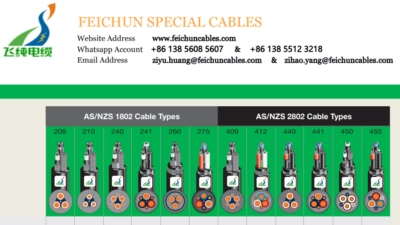
Mining Cable10 Min Read Electrical Systems Departmenton2026-01-16 Understanding AS/NZS 1802:2003 & AS/NZS 2802:2000 Mining Cable Standards AS/NZS 1802:2003, AS/NZS 2802:2000, AS/NZS 1802, AS/NZS 2802, Type 241 mining cable, Type 240 mining cable, Type 245 mining cable, Type 440… Discover More