Mining Cable5 Min Read Electrical Systems Departmenton2026-01-22 Type 455 Cables (3.3kV – 33kV): Technical Advantages of Interstitial Earth Conductor Design In medium and high-voltage mining cable engineering, the positioning of earth (grounding) conductors represents a critical design decision… Discover More
Mining Cable11 Min Read Electrical Systems Departmenton2026-01-22 Why Are Type 209 Cables (Individually Screened) Preferred Over Type 241 for High-Voltage Hand-Held Borers or Drill Rigs? The selection of appropriate cables for hand-held mining equipment such as borers, drills, and portable machinery is a critical safety… Discover More
Mining Cable11 Min Read Electrical Systems Departmenton2026-01-22 What are the mandatory sheath hardness and abrasion tests required for a cable to pass AS/NZS certification? AS/NZS 2802:2000 compliant, AS/NZS 1125 conductor standard, AS/NZS 3808 sheath standard, AS/NZS 5000.1, IEC 60228 conductor class, IEC 60287… Discover More
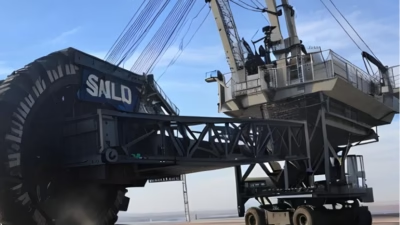
Mining Cable11 Min Read Electrical Systems Departmenton2026-01-22 How Do You Prevent “Birdcaging” in Large Cross-Section Type 455 Cables During Installation on Long-Travel Stackers? Birdcaging is a severe form of cable distortion that occurs when the individual strands or conductors of a cable unravel and expand outward,… Discover More
Mining Cable8 Min Read Electrical Systems Departmenton2026-01-22 Are AS/NZS 1802 Cables Suitable for Use in Saline Environments (Coastal Mines) or Acidic Groundwater Conditions? AS/NZS 1802 cables demonstrate strong suitability for deployment in both saline (coastal mining) environments and acidic groundwater… Discover More
Mining Cable7 Min Read Electrical Systems Departmenton2026-01-22 How Cables Are Designed to Withstand Extreme UV Radiation and Heat in the Pilbara and Western Australian Mining Regions The Pilbara region of Western Australia presents one of the most challenging operating environments for electrical cable systems on Earth.… Discover More
Mining Cable7 Min Read Electrical Systems Departmenton2026-01-21 Why Are Composite Screens (Copper/Nylon Braid) Used in Type 241 Cables, and How Do They Handle Fault Currents? Type 241 cables represent a specialised category of reeling and trailing cables engineered specifically for underground coal mining… Discover More
Mining Cable8 Min Read Electrical Systems Departmenton2026-01-21 What is the Difference in Earth Conductor Arrangement Between Type 450 (Distributed Earths) and Older Cable Designs? Type 450 cables, designed for voltage ratings from 3.3kV to 33kV, feature what engineers call a "distributed earth" arrangement. This modern… Discover More
Mining Cable9 Min Read Electrical Systems Departmenton2026-01-21 Why Do Australian Standards Mandate Specific Semi-Conductive Elastomer Screens for Cables Rated Above 1.1kV? The primary purpose of semi-conductive screens in medium voltage cables is to establish and maintain a uniformly divergent electric field… Discover More
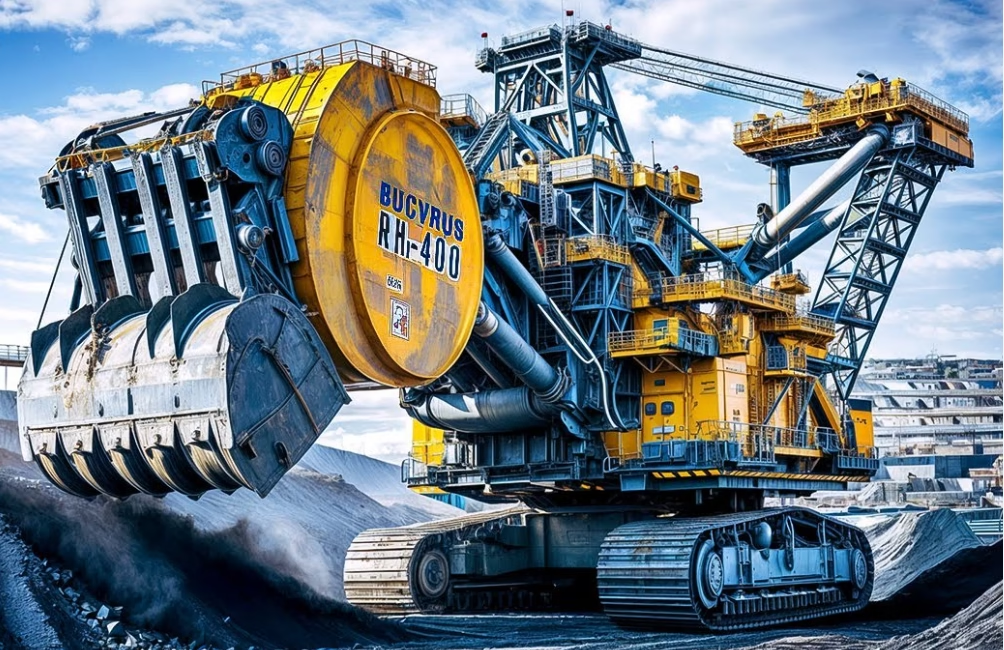
Mining Cable9 Min Read Electrical Systems Departmenton2026-01-21 What Are the Requirements for Type 409 Cables Used in Stacker-Reclaimer Systems? Type 409 cable, Type 409.1 cable, Type 409.3 cable, Type 409.6 cable, Type 409.11 cable, Type 409.22 cable, Type 440 cable, Type 450 cable,… Discover More
Mining Cable8 Min Read Electrical Systems Departmenton2026-01-21 When Should Type 209 (Metallic Screen) Cables Be Used Instead of Type 241 (Composite Screen)? Type 209 cable, Type 241 cable, Type 209.1 cable, Type 209.3 cable, Type 209.6 cable, Type 210 cable, metallic screen mining cable,… Discover More
Mining Cable6 Min Read Electrical Systems Departmenton2026-01-21 Type 275 vs Type 241 Cable: Semi-Conductive Screening Differences Two commonly specified cable types under the AS/NZS 1802 standard are Type 275 and Type 241, each featuring distinct semi-conductive screening… Discover More
Mining Cable7 Min Read Electrical Systems Departmenton2026-01-19 Why Do Australian Mining Cables Use 1.1/1.1kV Instead of the International Standard 0.6/1kV? Before examining why Australian mining cables require a 1.1/1.1kV rating, it is essential to understand how cable voltage ratings are… Discover More
Mining Cable9 Min Read Electrical Systems Departmenton2026-01-19 Australian Mining Cable Standards: AS/NZS 1802 & AS/NZS 2802 Type 241 电缆代表澳大利亚地下煤矿作业中部署最广泛的电缆类型,设计用于通用电源应用,包括连续采煤机、泵装置和其他移动采矿设备。该电缆具有三个带半导体屏蔽的主电力导体、三个位于电力导体之间的独立间隙接地导体,以及一个中心可延展导引线,提供机械加固并可用于监控功能。 Discover More
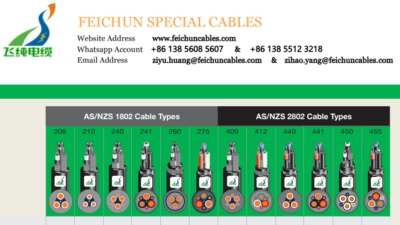
Mining Cable9 Min Read Electrical Systems Departmenton2026-01-19 Australian Mining Cable Standards: AS/NZS 1802 & AS/NZS 2802 AS/NZS 1802:2018 standard classifies underground coal mining cables into distinct type numbers, each representing specific construction… Discover More
Mining Cable7 Min Read Electrical Systems Departmenton2026-01-16 Type 210 Mining Cable — 1.1/1.1kV Hand-Held Equipment Cable Type 210 is a composite-screened, EPR-insulated, heavy-duty elastomer-sheathed cable specifically designed for hand-held boring machines,… Discover More
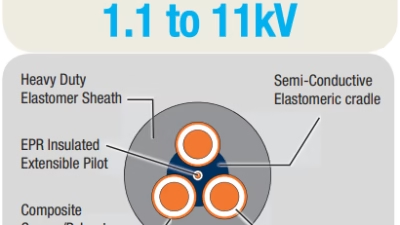
Mining Cable9 Min Read Electrical Systems Departmenton2026-01-16 Type 209 Mining Trailing Cable — 1.1kV to 11kV Type 209 cable construction follows a precisely engineered layer system designed to provide optimal electrical performance, mechanical… Discover More
Mining Cable10 Min Read Electrical Systems Departmenton2026-01-16 Understanding AS/NZS 1802:2003 & AS/NZS 2802:2000 Mining Cable Standards AS/NZS 1802:2003, AS/NZS 2802:2000, AS/NZS 1802, AS/NZS 2802, Type 241 mining cable, Type 240 mining cable, Type 245 mining cable, Type 440… Discover More
Mining Cable12 Min Read Electrical Systems Departmenton2026-01-15 What is AS/NZS 1802 – Reeling Cables for Underground Mining? AS/NZS 1802, AS/NZS 1802:2018, underground coal mining cable, reeling cable mining, trailing cable underground, Type 240 mining cable, Type… Discover More