电缆如何设计以承受皮尔巴拉和西澳大利亚矿区的极端紫外线辐射和高温
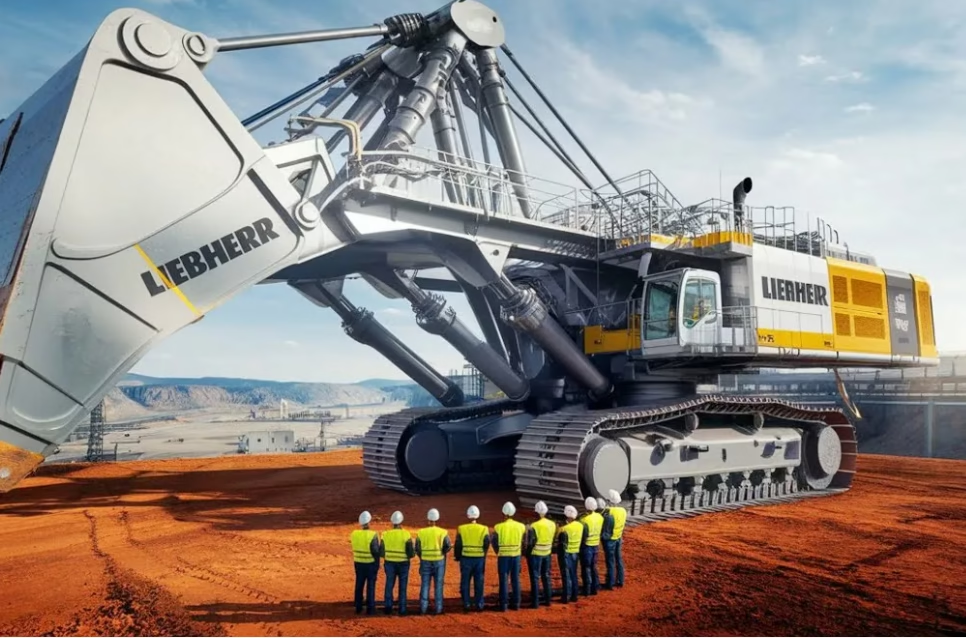
How Cables Are Designed to Withstand Extreme UV Radiation and Heat in the Pilbara and Western Australian Mining Regions
电缆如何设计以承受皮尔巴拉和西澳大利亚矿区的极端紫外线辐射和高温
Anhui Feichun Special Cable Co., Ltd. 安徽飞纯特种电缆有限公司
1. Introduction 引言
The Pilbara region of Western Australia presents one of the most challenging operating environments for electrical cable systems on Earth. Mining operations in this region—including iron ore extraction facilities operated by major companies—require cable systems engineered to survive temperature extremes, intense solar radiation, and demanding mechanical conditions. 皮尔巴拉地区是地球上电缆系统最具挑战性的运行环境之一。该地区的采矿作业需要专门设计的电缆系统来应对极端温度、强烈太阳辐射和严苛的机械条件。
According to the Australian Bureau of Meteorology, the Pilbara experiences daytime maximum temperatures ranging from 35°C to 41°C during summer months, with UV Index values reaching 11 to 14 (classified as “Extreme”). Historical records from locations such as Marble Bar indicate temperatures can approach 50°C. 根据澳大利亚气象局的数据,皮尔巴拉地区夏季日间最高温度可达35°C至41°C,紫外线指数达到11至14(被归类为”极端”)。
2. Environmental Challenges 环境挑战
2.1 Climate Conditions in the Pilbara 皮尔巴拉气候条件
| Parameter 参数 | Value 数值 | Impact on Cables 对电缆的影响 |
|---|---|---|
| Summer Maximum Temperature | 35–50°C | Accelerated thermal ageing of insulation materials |
| UV Index (Peak) | 11–14 (Extreme) | Photodegradation of polymer sheaths |
| Daily Temperature Variation | 15–25°C | Thermal cycling stress on materials |
| Annual Sunshine Hours | 9–12 hours/day | Extended UV exposure duration |
| Average Humidity (Inland) | 20–40% | Minimal moisture protection required |
| Annual Rainfall | 250–350mm | Occasional flooding and cyclone events |
表格说明:夏季最高温度可达50°C,紫外线指数达到极端级别14,日温差可达25°C,这些因素都对电缆材料提出了严格要求。
2.2 UV Radiation Effects on Polymer Materials 紫外线辐射对聚合物材料的影响
Ultraviolet radiation in the Pilbara causes progressive degradation of cable sheathing materials through a process of chain scission, where UV photons break polymer molecular bonds. This degradation typically manifests as surface chalking, colour fading, surface cracking, loss of flexibility, and ultimately, mechanical failure of the protective sheath layer. 皮尔巴拉的紫外线辐射通过链断裂过程逐渐降解电缆护套材料,紫外线光子破坏聚合物分子键。这种降解通常表现为表面粉化、颜色褪色、表面开裂、柔韧性丧失,最终导致保护护套层的机械失效。
3. Cable Design Strategies for Extreme Conditions 极端条件下的电缆设计策略
3.1 Multi-Layer Construction Approach 多层结构设计
Mining cables designed for Western Australian conditions utilise a multi-layer architecture where each layer addresses specific environmental or electrical requirements. The typical construction from inside to outside comprises: copper or aluminium conductor, semi-conductive screen, primary insulation (EPR or XLPE), insulation screen, metallic shield or armour, bedding layer, and outer protective sheath. 为西澳大利亚条件设计的矿用电缆采用多层架构,每一层都针对特定的环境或电气要求。典型结构从内到外包括:铜或铝导体、半导体屏蔽层、主绝缘层(EPR或XLPE)、绝缘屏蔽层、金属屏蔽或铠装、垫层和外保护护套。
3.2 Insulation Materials: EPR vs XLPE 绝缘材料:EPR与XLPE对比
| Property 性能 | EPR (Ethylene Propylene Rubber) 乙丙橡胶 | XLPE (Cross-Linked Polyethylene) 交联聚乙烯 |
|---|---|---|
| Normal Operating Temperature | 90–105°C | 90°C |
| Emergency Operating Temperature | 140°C | 105–130°C |
| Short-Circuit Temperature | 250°C | 250°C |
| Flexibility | Excellent (superior for reeling) | Good (harder, denser structure) |
| UV Resistance (bare) | Good inherent resistance | Poor (requires protective jacket) |
| Ozone Resistance | Excellent | Moderate |
| Moisture Resistance | Good | Excellent |
| Typical Service Life | 20–25 years | 30–40 years |
EPR(乙丙橡胶)绝缘具有优异的柔韧性和耐臭氧性,适合移动设备拖曳电缆;XLPE(交联聚乙烯)具有更长的使用寿命和更好的防潮性能,适合固定安装。
4. Outer Sheath Materials for UV and Heat Protection 用于紫外线和热防护的外护套材料
The outer sheath serves as the cable’s primary defence against environmental damage. For Pilbara mining applications, three principal sheath materials are specified: 外护套是电缆抵御环境损害的主要防线。对于皮尔巴拉采矿应用,主要指定三种护套材料:
PCP (Polychloroprene / Neoprene) 聚氯丁橡胶
- Temperature Range: -25°C to +90°C continuous
- UV Resistance: Good inherent resistance
- Oil/Chemical Resistance: Excellent
- Flame Retardancy: Inherently flame retardant
- Application: Standard mining cable sheath, AS/NZS 2802 Type 440/450
PCP是矿用电缆的标准护套材料,具有良好的耐油性、耐化学性和阻燃性。
CSP/CSPE (Chlorosulfonated Polyethylene) 氯磺化聚乙烯
- Temperature Range: -40°C to +125°C (up to +148°C compounded)
- UV Resistance: Excellent (superior to PCP and most elastomers)
- Ozone Resistance: Outstanding (unaffected by ozone)
- Weathering Resistance: Very high resistance to sunlight ageing
- Application: Extended sunlight exposure applications, outdoor installations
CSP/CSPE在弹性体中具有最优异的紫外线和臭氧抵抗能力,是高日照环境的首选材料。
CPE (Chlorinated Polyethylene) 氯化聚乙烯
- Temperature Range: -30°C to +105°C
- UV Resistance: Very good
- Chemical Resistance: Excellent against oils, acids, alkalis
- Cost: More economical than CSPE
- Application: Alternative to PCP for enhanced UV protection
CPE是PCP的经济型替代品,在需要增强紫外线防护的应用中表现良好。
| Property 性能 | PCP | CSP/CSPE | CPE |
|---|---|---|---|
| UV Resistance Rating | Good | Excellent | Very Good |
| Heat Resistance | Good | Excellent | Good |
| Ozone Resistance | Good | Outstanding | Good |
| Abrasion Resistance | Excellent | Very Good | Good |
| Flexibility at Low Temp | Good | Good | Moderate |
| Cost Factor | Standard | Premium (+30–50%) | Moderate (+10–20%) |
5. Australian and International Standards Compliance 澳大利亚和国际标准合规
Cables for Western Australian mining operations must comply with stringent national and international standards that ensure safety, performance, and reliability. 用于西澳大利亚采矿作业的电缆必须符合严格的国家和国际标准,以确保安全、性能和可靠性。
| Standard 标准 | Scope 范围 | Key Requirements 关键要求 |
|---|---|---|
| AS/NZS 2802:2003 | Reeling and trailing cables for mining | Construction, electrical properties, mechanical performance for Type 240, 440, 441, 450 cables |
| AS/NZS 1125:2001 | Conductors in insulated electric cables | Conductor materials, resistance values, stranding requirements |
| AS/NZS 5000.1 | Electric cables – polymeric insulated | General requirements for power and control cables |
| AS/NZS 1429.1 | Electric cables – polymeric insulated | Medium voltage (6.6kV to 33kV) specifications |
| IEC 60811-403 | Test methods – Ozone resistance | Ozone resistance test for cross-linked compounds |
| IEC 60811-401 | Test methods – Thermal ageing | Air oven ageing procedures for insulation/sheath |
| IEC 60811-605 | Test methods – Carbon black content | Carbon black measurement for UV stabilisation |
AS/NZS 2802是澳大利亚矿用电缆的核心标准,涵盖Type 440、441、450等电缆类型的构造和性能要求。IEC 60811系列标准规定了非金属材料的测试方法。
6. Cable Types for Pilbara Mining Applications 皮尔巴拉采矿应用的电缆类型
6.1 Trailing and Reeling Cables 拖曳和收放电缆
| Type 类型 | Voltage Rating 电压等级 | Application 应用 | Key Features 主要特点 |
|---|---|---|---|
| Type 240/241/245 | 1.1kV – 11kV | Mine power feeder, continuous miners, longwall supply | Water, oil, flame resistant; UV protected |
| Type 440 | 0.66/1.1kV – 12.7/22kV | Trailing cables for mobile mining equipment | EPR insulation, PCP/CPE/CSP sheath options |
| Type 441 | 0.66/1.1kV – 12.7/22kV | Heavy-duty trailing cables | Enhanced mechanical protection, multicore configurations |
| Type 450 | 3.3kV – 33kV | Draglines, bucket-wheel excavators (BWE) | Extra-heavy duty sheath, reeling duty rated |
Type 440/441适用于移动采矿设备的拖曳电缆;Type 450专为挖掘机和斗轮挖掘机等重型设备设计,具有超重型护套。
6.2 Temperature and Current Derating 温度和电流降容
For installations in ambient temperatures exceeding 40°C, cable current-carrying capacity must be derated. Standard practice specifies a derating factor of approximately 1% per °C above the reference ambient temperature of 40°C. For Pilbara conditions where ambient temperatures may reach 50°C, this represents a 10% reduction in continuous current rating. 对于环境温度超过40°C的安装,电缆载流量必须降容。标准实践规定,高于40°C参考环境温度时,每升高1°C降容约1%。对于皮尔巴拉环境温度可能达到50°C的条件,这意味着连续电流额定值降低10%。
7. UV Stabilisation Techniques 紫外线稳定技术
UV stabilisation of cable sheathing materials employs several complementary strategies: 电缆护套材料的紫外线稳定采用多种互补策略:
Carbon Black Addition 添加炭黑
- Concentration: Minimum 2–2.5% by weight for polyethylene compounds
- Function: Absorbs UV radiation, prevents penetration to polymer matrix
- Testing Standard: IEC 60811-605 specifies measurement methods
- Effectiveness: Provides long-term protection (20+ years outdoor exposure)
炭黑是最有效的紫外线稳定剂,通过吸收紫外线辐射保护聚合物基质。最低添加量为2%重量百分比。
Hindered Amine Light Stabilisers (HALS) 受阻胺光稳定剂
- Mechanism: Scavenges free radicals formed by UV exposure
- Application: Used in coloured compounds where carbon black is unsuitable
- Combined Use: Often paired with UV absorbers for synergistic effect
Material Selection 材料选择
- CSPE/CSP sheaths: Inherent UV stability from polymer structure
- Fluoropolymers: Ultimate UV resistance for extreme applications
- Silicone compounds: High UV and temperature resistance
8. Testing and Quality Assurance 测试与质量保证
| Test 测试 | Standard 标准 | Method 方法 | Acceptance Criteria 验收标准 |
|---|---|---|---|
| Ozone Resistance | IEC 60811-403 | Exposure to 200–300 ppm O₃ at controlled temperature | No visible cracking after specified duration |
| Thermal Ageing | IEC 60811-401 | Air oven ageing at elevated temperature | Retention of tensile strength and elongation ≥80% |
| UV Accelerated Weathering | ISO 4892 / ASTM G154 | UV-A/UV-B lamp exposure with moisture cycles | Minimal colour change, no cracking |
| Carbon Black Content | IEC 60811-605 | Combustion analysis | ≥2.0% for UV-stabilised PE compounds |
| Hot Set Test | IEC 60811-507 | Elongation under load at elevated temperature | Elongation ≤175%, permanent set ≤15% |
9. Installation and Maintenance Recommendations 安装和维护建议
9.1 Installation Best Practices 安装最佳实践
- Cable Routing: Minimise direct sun exposure where practical; utilise shaded routes or cable trays with covers 电缆布线:尽量减少直接日晒;使用有遮阳的路径或带盖电缆槽
- Bend Radius: Maintain minimum bend radius per manufacturer specifications (typically 6–12× cable OD) 弯曲半径:保持制造商规定的最小弯曲半径(通常为电缆外径的6-12倍)
- Termination: Use heat-shrink or cold-shrink terminations rated for outdoor/UV exposure 端接:使用适用于户外/紫外线暴露的热缩或冷缩端接
- Cable Glands: Select glands with UV-resistant bodies for outdoor junction boxes 电缆接头:为户外接线盒选择具有抗紫外线本体的接头
9.2 Inspection and Maintenance Schedule 检查和维护计划
| Inspection Type 检查类型 | Frequency 频率 | Key Checkpoints 关键检查点 |
|---|---|---|
| Visual Inspection | Monthly | Surface chalking, colour changes, cracking, mechanical damage |
| Insulation Resistance Test | Annually | IR value ≥0.1 MΩ/km at 500V DC |
| Thermal Imaging | Quarterly | Hotspots at terminations, joints, and high-load sections |
| Comprehensive Assessment | Every 5 years | Full electrical testing, sheath sample analysis |
定期检查对于确保电缆在严酷环境中的可靠性至关重要。月度目视检查可早期发现紫外线降解迹象。
9.3 Expected Service Life 预期使用寿命
Under Pilbara conditions with appropriate material selection and proper installation, typical service life expectations are: 在皮尔巴拉条件下,选择适当材料并正确安装后,典型的使用寿命预期为:
- Trailing cables (Type 440/450): 5–10 years (depending on mechanical duty) 拖曳电缆:5-10年(取决于机械工况)
- Fixed installation cables: 15–25 years 固定安装电缆:15-25年
- XLPE-insulated cables with CSP sheath: 25–35 years 带CSP护套的XLPE绝缘电缆:25-35年
10. Summary and Conclusions 总结与结论
Cables designed for the extreme UV radiation and heat of the Pilbara and Western Australian mining regions require a comprehensive engineering approach that addresses thermal management, UV protection, and mechanical durability. The key design elements include: 为皮尔巴拉和西澳大利亚矿区极端紫外线辐射和高温设计的电缆需要综合考虑热管理、紫外线防护和机械耐久性的工程方法。关键设计要素包括:
- Selection of high-temperature insulation materials (EPR or XLPE with 90–105°C continuous rating)
- Application of UV-resistant outer sheaths (CSP/CSPE preferred for maximum UV protection, PCP/CPE for standard applications)
- Carbon black or HALS stabilisation in polyolefin compounds
- Compliance with AS/NZS 2802 and related Australian standards
- Appropriate derating for elevated ambient temperatures
- Regular inspection and preventive maintenance programmes
For mining operations in the Pilbara region, investment in appropriately specified cable systems represents a critical factor in operational reliability and safety. 对于皮尔巴拉地区的采矿作业,投资于适当规格的电缆系统是运营可靠性和安全性的关键因素。
References and External Resources 参考文献和外部资源
- Australian Bureau of Meteorology. “Pilbara District Weather Forecast.” www.bom.gov.au/wa/forecasts/pilbara.shtml
- Sudmeyer, R. (2016). “Climate in the Pilbara.” Bulletin 4873, Department of Agriculture and Food, Western Australia. library.dpird.wa.gov.au/bulletins/220/
- Australian Bureau of Meteorology. “Average Solar Ultraviolet (UV) Index – Climate.” www.bom.gov.au/climate/maps/averages/uv-index/
- Standards Australia. “AS/NZS 2802:2003 – Electric cables – Reeling and trailing – For underground and open-cut mining.”
- Standards Australia. “AS/NZS 1125:2001 – Conductors in insulated electric cables and flexible cords.”
- Standards Australia. “AS/NZS 5000.1 – Electric cables – Polymeric insulated.”
- International Electrotechnical Commission. “IEC 60811-403 – Test methods for non-metallic materials – Ozone resistance test.” tratosgroup.com/products/standards/iec/iec-60811/
- Eland Cables. “Type 440 and Type 441 Flexible Rubber Mining Cables.” www.elandcables.com/cables/type-440-and-type-441-flexible-rubber-mining-cables
- Eland Cables. “FAQ: The benefits of CSPE sheathed cables.” www.elandcables.com/the-cable-lab/faqs/faq-what-are-the-benefits-of-cspe-sheathed-cables
- Tratos Group. “Chloro Sulphonated Polyethylene – CSP.” tratosgroup.com/tratos-cable-academy/
- Nexans Australia. “Cable Technical FAQ.” www.nexans.com.au/en/tools-resources/FAQ.html
- Prysmian Group. “Cable Guide for the Mining Industry.” australia.prysmian.com
- Queensland Government Resources Safety & Health. “Recognised Standard 01 – Underground Coal Mines.” resources.qld.gov.au
Contact Anhui Feichun Special Cable Co., Ltd. 联系安徽飞纯特种电缆有限公司
For technical enquiries regarding mining cables for extreme environment applications, please contact our engineering team: 如需有关极端环境应用矿用电缆的技术咨询,请联系我们的工程团队: